

Study on GCC Wage Protection System Launched
Geneva, November 25, 2025
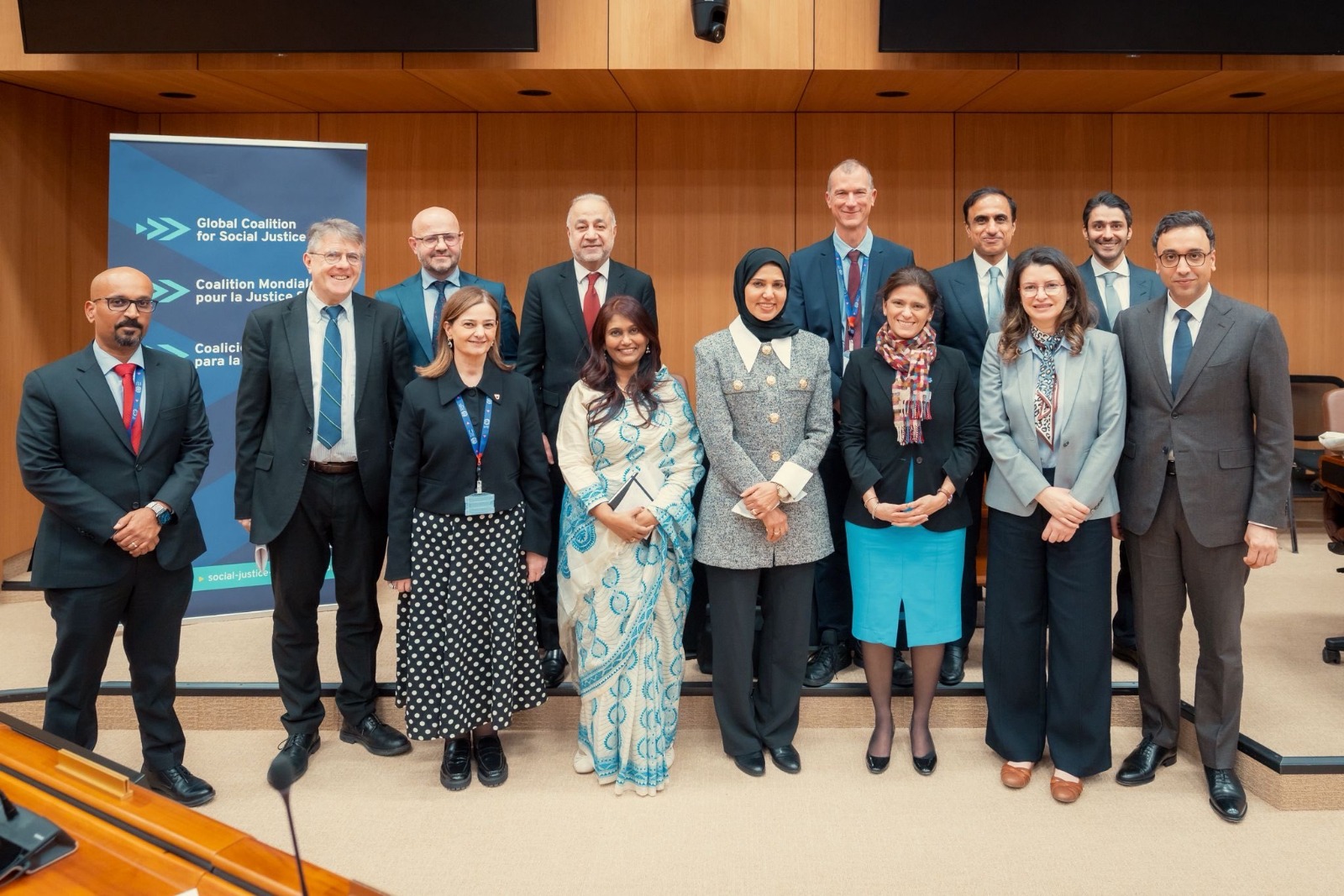
The Permanent Mission of the State of Qatar in Geneva, in cooperation with the Executive Bureau of the Council of Ministers of Labour and Social Affairsآ in the GCC States and the International Labor Organization (ILO), organized a high-level event held at the headquarters of the ILO in Geneva, on the sidelines of the 355th session of its Governing Body, during which a study was launched highlighting the progress made by the GCC countries in building effective wage protection systems (WPS).
The event witnessed a high-level attendance, with the first part featuring keynote addresses by HE Minister of Labor Dr. Ali bin Saeed bin Samikh Al Marri, HE ILO Director-General Gilbert Houngbo, and HE Mr. Mohammed Hassan Al Obaidli, HE Director-General of the Executive Office of the Council of Ministers of Labor of the GCC Mohammed Hassan Al Obaidli.
In her keynote remarks at the panel discussion, HE Permanent Representative of the State of Qatar to the United Nations Office in Geneva Dr. Hind Abdul Rahman Al Muftah emphasized the effective interdependence and integration of wage protection mechanisms in the State of Qatar.
Her Excellency indicated that enhancing the protection of workers' rights and establishing fair labor practices are a priority for the State of Qatar. She noted that the Ministry of Labor has adopted an integrated system that includes the WPS, grievance mechanisms, and the Workers' Support and Insurance Fund to ensure effective protection at all stages.
Her Excellency stressed that the integration of these three mechanisms provides a comprehensive framework for protection, promotes decent work, ensures compliance with laws, and reflects the State of Qatar's commitment to a fair and transparent labor market that protects workers' rights and promotes social justice.
The joint study reviews the important steps taken by the GCC countries to ensure that wages are paid on time and correctly, through the establishment and development of WPS that comply with international labor standards.
The ILO considers these systems a pioneering innovation at the regional level aimed at promoting transparency and accountability in wage payment practices.